

Friction Tyres
Friction tyres are winter tyres without studs that grip snow and ice through a soft rubber compound and dense sipes. They are quieter than studded tyres, cause far less road wear and are best suited to city driving and cleared roads. When choosing, it helps to understand the difference between Nordic and Central European winter tyres.
10088 matching results


 M+S
M+S
Stock in stores
 M+S
M+S
Stock in stores
M+S
Stock in stores
M+S
Stock in stores
 M+S
M+S
Stock in stores
M+S
Stock in stores
M+S
Stock in stores
M+S
Stock in stores
M+S
Stock in stores
 M+S
M+S
Stock in stores
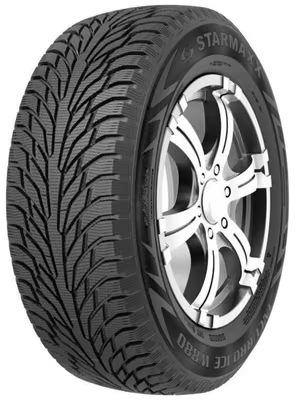 M+S
M+S
Stock in stores
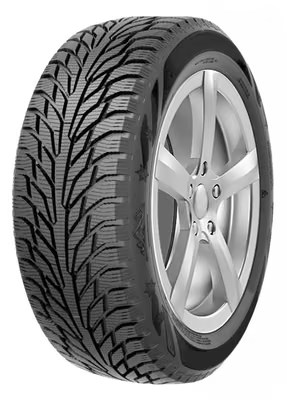 M+S
M+S
Stock in stores
M+S
Stock in stores
M+S
Stock in stores
M+S
Stock in stores
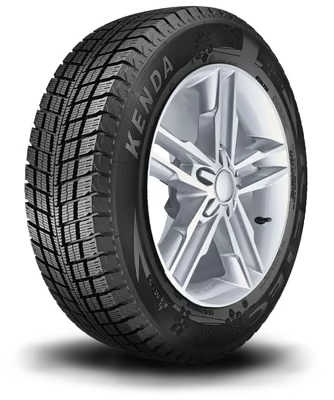
 M+S
M+S
Stock in stores
M+S
Stock in stores
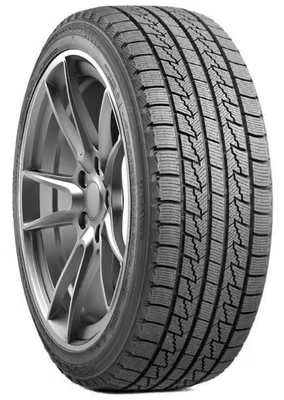
 M+S
M+S
Stock in stores
M+S
Stock in stores
 M+S
M+S
Stock in stores
M+S
Stock in stores
M+S
Stock in stores
M+S
Stock in stores
M+S
Stock in stores
24 from 10088 products displayed
What friction tyres are
Friction tyres have no studs. Grip on slippery surfaces comes from a rubber compound that stays flexible in the cold and from a large number of small cuts in the tread (sipes) whose edges bite into snow and ice. This category also includes studdable tyres sold without studs, which are used as ordinary friction tyres. The softer the compound and the more sipes, the better the tyre grips on ice – but the faster it wears in warm weather.
Nordic versus Central European winter tyres
- Nordic – a softer compound designed for ice, packed snow and severe frost. Some of them carry the ice pictogram on the EU label, which means they have passed an ice grip test. On wet and warmer asphalt these tyres usually brake less well.
- Central European – a firmer compound designed for slush, wet asphalt and temperatures around zero, often with higher speed ratings too. On ice they fall short of Nordic tyres.
Lithuanian winters often alternate between slush and black ice, so choose according to the conditions you drive in most often.
What the rules say about friction tyres
Legal requirement: friction tyres are subject to the same rules as all winter tyres: from 10 November to 31 March, on vehicles with a gross weight of up to 3.5 t they must be marked M+S or 3PMSF, and tyres on passenger cars (M1) and light commercial vehicles (N1) must have a tread depth of at least 3.0 mm. Unlike studded tyres, they need no rear sign. The difference between M+S and 3PMSF is explained in our article on the 3PMSF symbol.
When to choose friction over studded tyres
Friction tyres pay off if you spend most of the winter on cleared streets and main roads. On dry and wet asphalt, which Lithuanian winters have plenty of, they usually brake at least as well as studded tyres and are much quieter. They can still be used after 10 April, when studded tyres must come off, but in warm weather they wear quickly and brake less well than summer tyres. If you often drive on icy rural roads, consider studded tyres.