

Summer Tyres
Summer tyres use a rubber compound designed for warm weather and a tread that quickly channels water away from under the tyre. In Lithuania you can drive on them from 1 April to 9 November. When choosing, focus on wet grip, braking, noise and a load index that suits your car. Read the guide
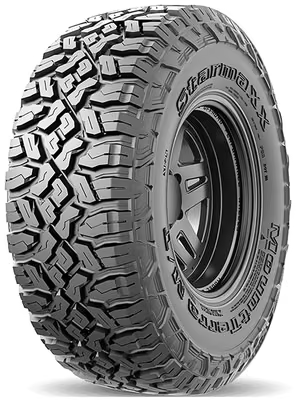


Stock in stores
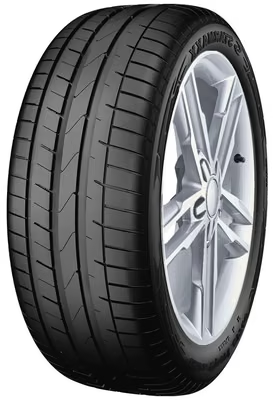
Stock in stores
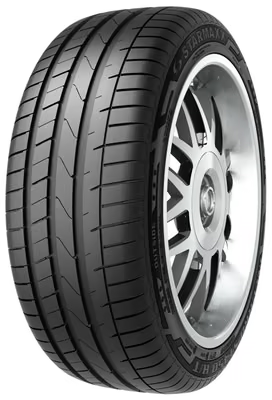
Stock in stores
Stock in stores
Stock in stores
Stock in stores
Stock in stores
Stock in stores
Stock in stores
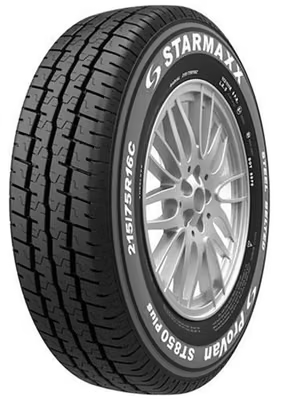
Stock in stores
Stock in stores
Stock in stores
Stock in stores
Stock in stores
Stock in stores
Stock in stores
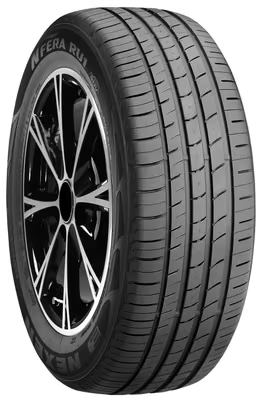

Stock in stores
Stock in stores
Stock in stores
Stock in stores
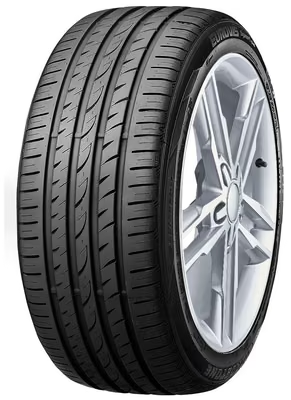
Stock in stores
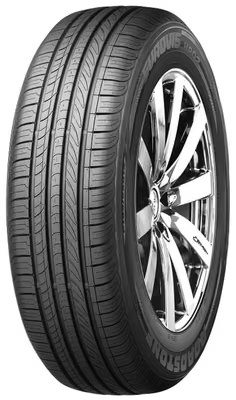
Stock in stores
Stock in stores
Stock in stores
When to switch to summer tyres
Legal requirement: the Road Traffic Rules prohibit driving on summer tyres from 10 November to 31 March (point 230), so you can fit them from 1 April. Driving on studded tyres is prohibited from 10 April (point 229); if winter conditions persist, the Minister of Transport and Communications can extend this deadline.
Recommendation: there is no need to rush, as April can still bring frosts. Summer tyres work best once the average daily temperature stays above roughly +7 °C. Read more in our article on when to change tyres.
What to look for
- Wet grip – the EU label class from A to E. In summer, braking distance depends on the tyres most when it rains.
- Dry braking and handling – these are not on the label, so independent test results are worth checking.
- Noise – the label shows external rolling noise in decibels. It only partly reflects what you hear inside the car, but the benefit of quieter tyres is most noticeable on motorways and in electric cars.
- Load – SUVs and electric cars often need reinforced (XL) tyres, and the load index should be no lower than the vehicle manufacturer specifies – see our article on load ratings.
Tread depth: legal minimum and recommendation
Legal requirement: tyres on passenger cars (M1) and light commercial vehicles (N1) must have a tread depth of at least 1.6 mm.
Recommendation: consider replacing summer tyres when the tread depth is down to about 3 mm. Shallower tread clears water less effectively, so braking distances on wet roads grow longer and the risk of aquaplaning increases. Rubber also hardens with age, so check the production date in the DOT code as well.
Summer or all-season?
If you do a lot of motorway driving in summer or often carry a full load, summer tyres will stop shorter and wear more slowly than all-season tyres. The all-season tyres page explains when a single set is enough.